
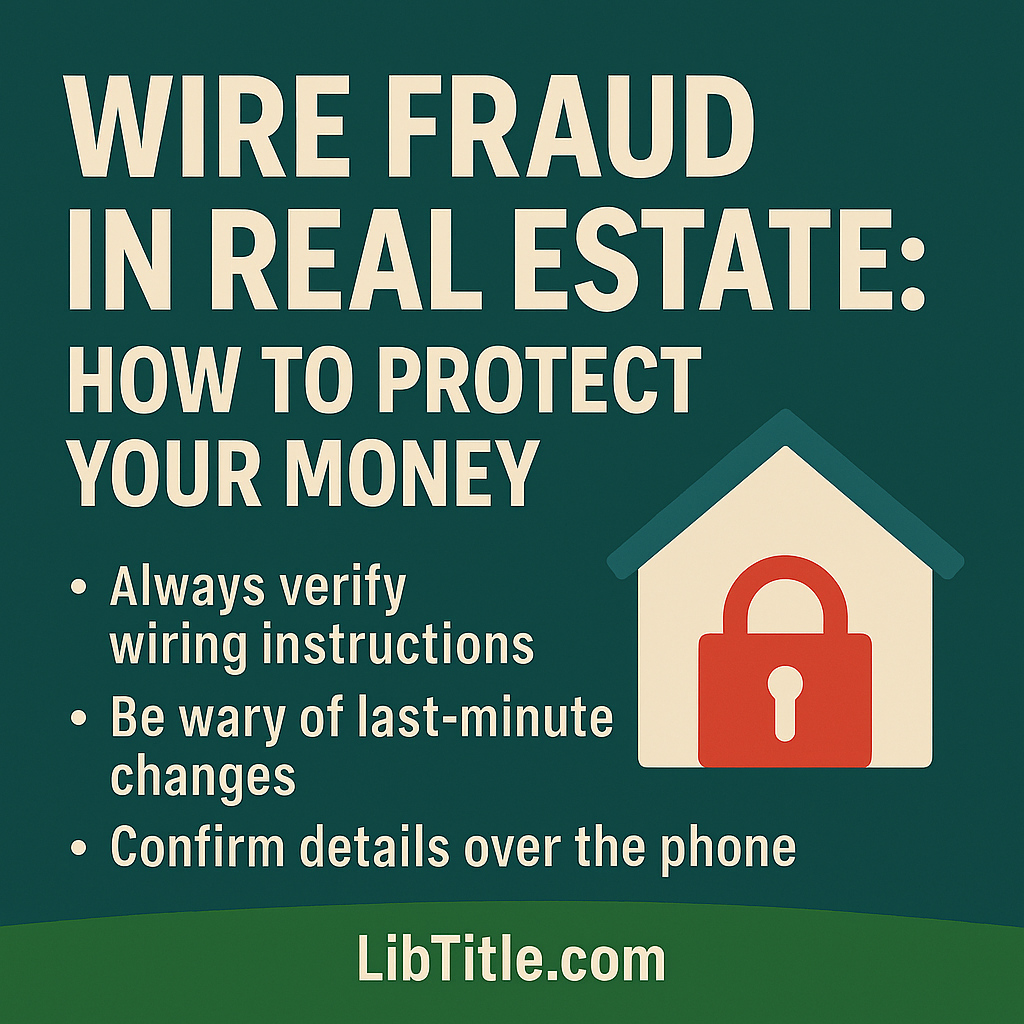
Buying or selling a home is one of the largest financial transactions most people will ever make—and unfortunately, it’s also a prime target for scammers. Wire fraud in real estate is on the rise, and a single mistake can cost buyers and sellers thousands—or even hundreds of thousands—of dollars.
Understanding how these scams work—and how to prevent them—can protect you from devastating financial loss.
💻 What Is Wire Fraud in Real Estate?
Wire fraud occurs when a scammer tricks you into sending money—typically your closing funds—to the wrong bank account.
This usually happens during the final stages of a real estate transaction, when buyers are expecting legitimate instructions from a title company, attorney, or lender.
⚠️ How the Scam Works
A hacker gains access to email communications (often through phishing or compromised accounts).
The hacker monitors conversations between you, your real estate agent, or your title company.
At the right moment—often just before closing—you receive an email with “updated” wiring instructions.
Believing the message is legitimate, you wire your funds directly to the scammer.
Once the money is sent, it can be extremely difficult—sometimes impossible—to recover.
🔴 Red Flags to Watch For
Be cautious if you notice:
❗ Last-minute changes to wiring instructions
❗ Emails with urgent or high-pressure language
❗ Messages that contain slight variations in email addresses
❗ Instructions that differ from what you were previously told
❗ Requests to send funds quickly without verification
✅ How to Protect Yourself
The good news: wire fraud is highly preventable if you follow best practices.
1. Always Verify Wiring Instructions by Phone
Call your title company or attorney using a trusted phone number—not the number in the email.
2. Never Trust Email Alone for Fund Transfers
Email is not secure. Treat wiring instructions sent via email as unverified until confirmed.
3. Confirm Details Twice
Before sending any funds, double-check:
Account number
Routing number
Recipient name
Even a small error can send your money to the wrong place.
4. Be Suspicious of Changes
If wiring instructions change at any point, pause immediately and verify verbally.
5. Secure Your Email
Use strong passwords and enable multi-factor authentication to reduce the risk of account compromise.
🛑 What to Do If You Think You’ve Been Scammed
Act fast—timing is critical.
Immediately contact your bank or wire transfer provider
Request a wire recall
Report the incident to the FBI Internet Crime Complaint Center (IC3)
Notify your title company and real estate agent
The faster you act, the better the chances of recovering your funds.
🔐 How Title Companies Help Protect You
Reputable title companies take security seriously and often:
Provide secure portals for communication
Give clear instructions on how funds should be transferred
Educate clients about fraud risks
Use verification protocols before closing
When in doubt, your title company is your best resource—always call them directly.
🏡 Final Thoughts
Wire fraud is a real and growing threat in real estate—but it’s also 100% avoidable with awareness and caution.
Remember:
👉 Never trust wiring instructions without verifying them
👉 Always call before sending money
👉 Take your time—scammers rely on urgency
Protecting your transaction protects your investment.
📞 Need Help or Have Questions?
Liberty Title is here to guide you every step of the way with secure, reliable closing services.
👉 Contact our team today to learn more or start your transaction.
