
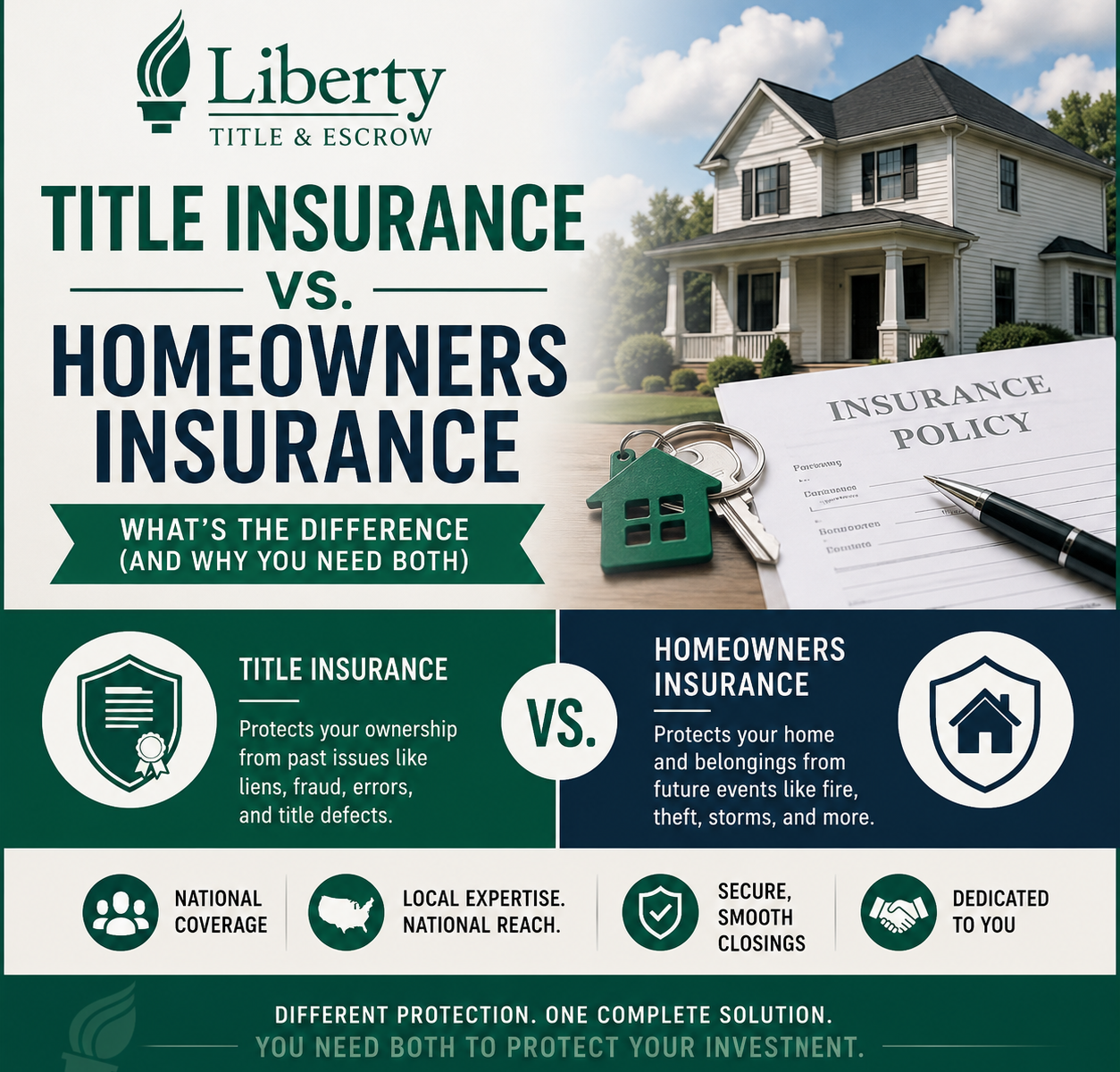
Buying a home is one of the biggest investments you’ll ever make. Along the way, you’ll encounter several types of insurance designed to protect that investment. Two of the most important are title insurance and homeowners insurance.
Although their names sound similar, they serve very different purposes.
Understanding the difference can help you make informed decisions at closing and protect both your property and your financial future.
What Is Homeowners Insurance?
Homeowners insurance protects you from future events that could damage your home or property. It provides financial protection if something unexpected happens after you’ve purchased your home.
A standard homeowners insurance policy typically covers:
Additional living expenses if your home becomes temporarily uninhabitable
Most mortgage lenders require homeowners insurance before they’ll fund your loan because it helps protect the property’s value.
Simply put, homeowners insurance protects your home and belongings moving forward.
What Is Title Insurance?
Title insurance protects your legal ownership of your property.
Unlike homeowners insurance, which covers future events, title insurance protects against problems that already existed before you purchased the home—even if no one knew about them at the time of closing.
Before closing, a title company performs a thorough title search to uncover potential issues. While most problems are identified and resolved beforehand, some hidden risks can remain.
Title insurance helps protect you against issues such as:
These issues may not appear until months—or even years—after you’ve purchased the property.
An owner’s title insurance policy provides protection for as long as you or your heirs own the property.
Title Insurance vs. Homeowners Insurance
While both offer valuable protection, they cover entirely different risks.
| Homeowners Insurance | Title Insurance |
| —————————————– | —————————————————————– |
| Protects against future damage | Protects against past ownership issues |
| Covers your house and belongings | Protects your legal ownership rights |
| Paid annually | One-time premium at closing |
| Required by most lenders | Lender’s policy is required; owner’s policy is highly recommended |
| Covers fire, storms, theft, and liability | Covers liens, fraud, title defects, and ownership disputes |
Think of it this way:
Why Owner’s Title Insurance Matters
Many buyers assume that because the lender requires title insurance, they’re automatically protected.
Not exactly. The lender’s title policy protects the lender’s financial interest in the property—not yours.
An owner’s title insurance policy protects your equity and ownership rights.
Imagine these scenarios:
An Old Contractor’s Lien
Years before the home was sold, a contractor was never paid and filed a lien that wasn’t properly recorded. After closing, you’re notified that payment is owed.
Without owner’s title insurance, resolving the issue could become your responsibility.
A Forged Signature
A previous deed contained a forged signature that wasn’t discovered until after the sale.
This could lead to costly legal disputes over ownership.
Unknown Heirs
An heir to a previous owner unexpectedly claims legal ownership of the property years after you’ve moved in.
Without title insurance, defending your ownership rights could require significant legal expenses.
Public Record Errors
Even a simple clerical error in county records can create delays or disputes when refinancing or selling your property.
Title insurance helps resolve these issues quickly and efficiently.
Why Buyers Should Have Both
How Liberty Title & Escrow Helps Protect Your Investment
At Liberty Title & Escrow, we understand that every real estate transaction is unique.
Our experienced professionals conduct thorough title searches, resolve potential issues before closing, and provide comprehensive title insurance designed to protect buyers, lenders, investors, and real estate professionals.
Whether you’re purchasing your first home, refinancing, investing in commercial property, or coordinating a multi-state transaction, our team is committed to making your closing smooth, secure, and stress-free.
With nationwide reach and personalized service, Liberty Title & Escrow delivers the confidence you need from contract to closing.
Closing Thoughts
While homeowners insurance and title insurance are both essential, they protect you in very different ways.
One safeguards your home against future events.
The other protects your ownership from hidden issues rooted in the property’s past.
Understanding the difference gives you peace of mind—and helps ensure your investment remains protected for years to come.
If you’re preparing for a real estate closing, Liberty Title & Escrow is here to guide you every step of the way.
